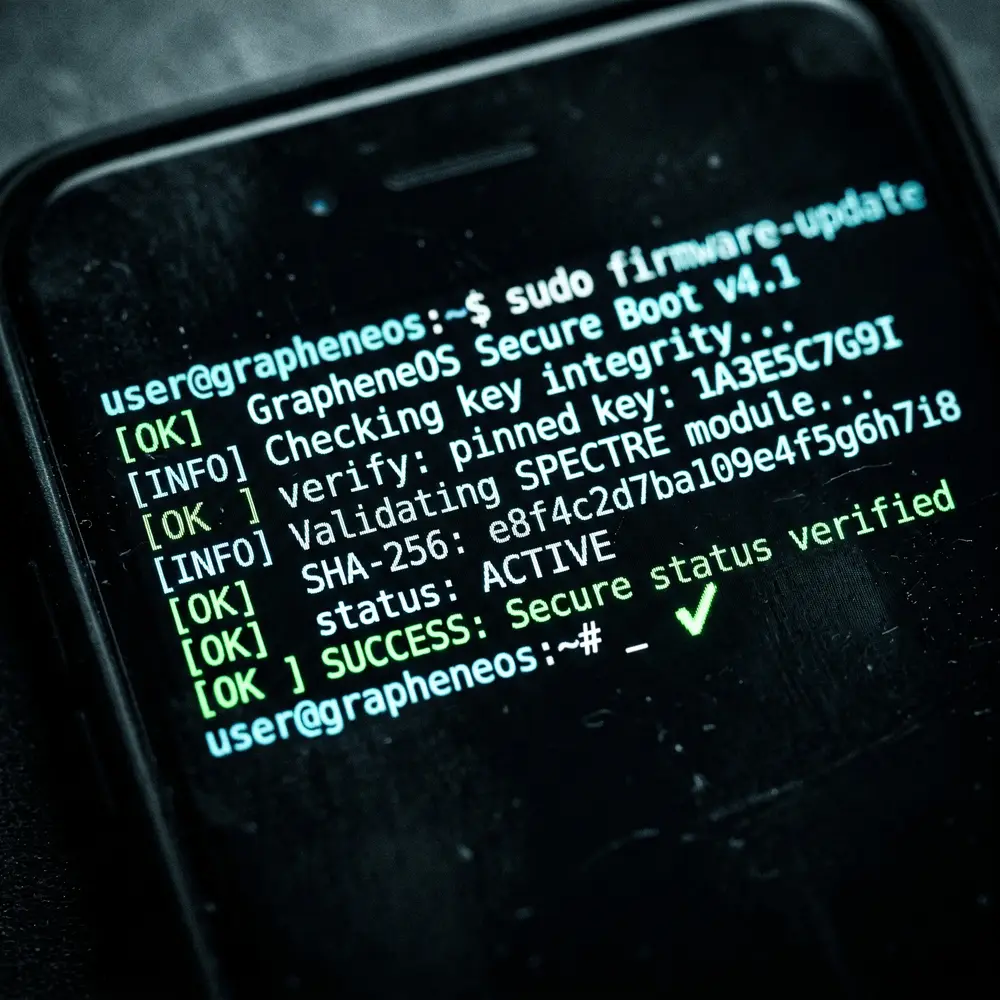
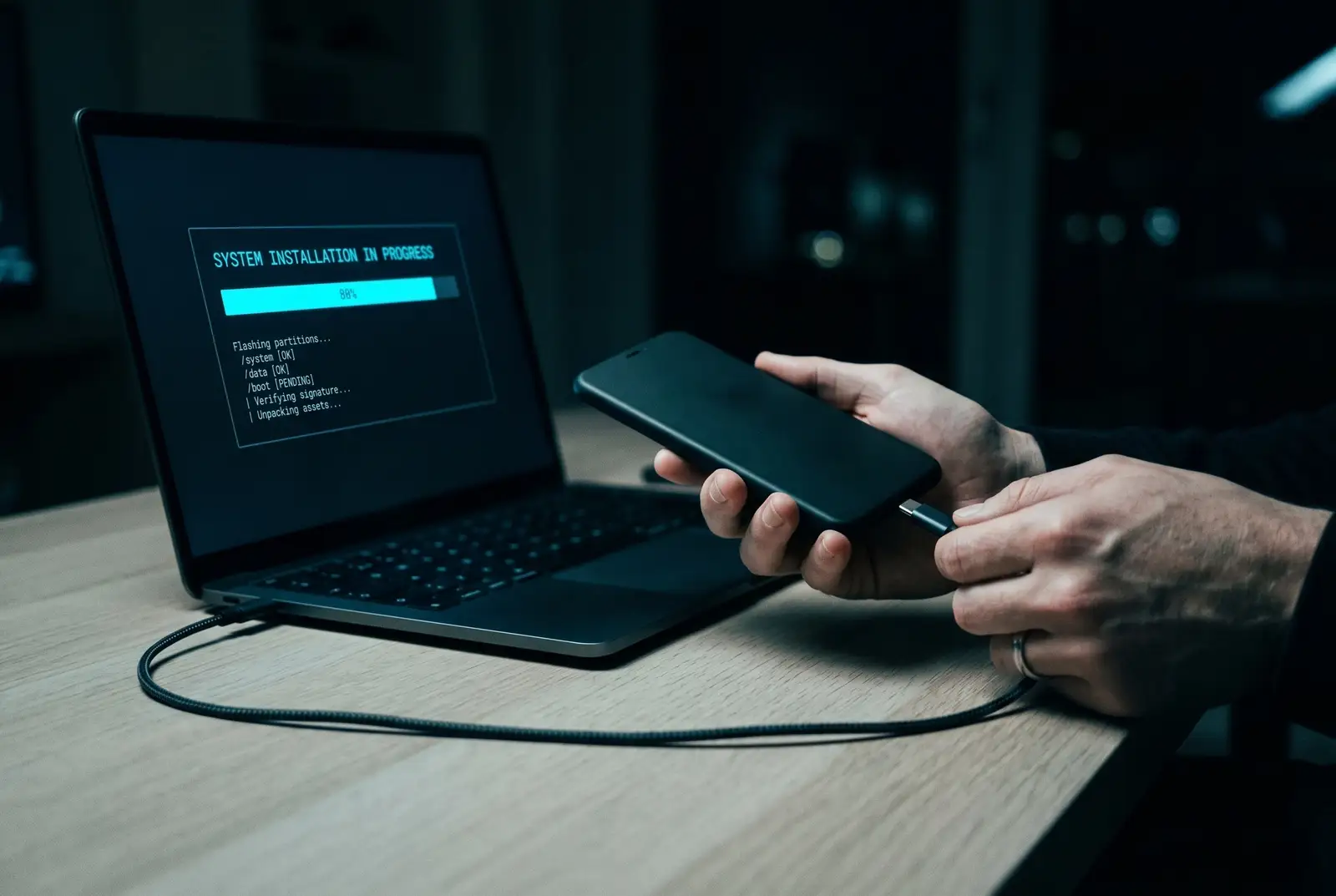
The seller's word is the weakest link — so remove it.
If a "secure phone" can only be vouched for by the person selling it, it isn't secure. It's merchandise with a story.
Consider the chain between our bench and your doorstep: a payment processor, a warehouse, a customs desk, a courier, possibly a border inspection. Any honest privacy vendor has to admit they control none of it once the parcel leaves. Most of the industry papers over this with reputation — reviews, badges, confident copy. We would rather hand you the tool that makes our reputation irrelevant.
Every Pixel we sell carries a dedicated security chip, and GrapheneOS ships first-party software built around one question: is this device running what it says it is? The chip can sign a statement — generated inside the silicon, unreadable and unforgeable from outside — declaring which operating system booted and whether the verified-boot chain is locked. That signature does not belong to us. We could not fake a passing result if we wanted to, and neither could anyone who handled the box after us.
So the audit below is not a courtesy feature. It is the entire basis on which a stranger-to-stranger sale of a privacy phone makes sense. Run it before you sign into anything. It takes a few minutes and a QR code.
"The point of the audit is that our honesty stops being load-bearing."